Security and fire safety are usually discussed as two separate projects, yet they answer the same question: how does this household stay safe without feeling fortified? This checklist walks room by room and gate by gate, combining sensible hardware with the routines that make it work.
Protection is a habit, not a gadget
Most home security failures are not technical. A camera that nobody reviews, a smoke alarm with a flat battery and a side gate left unlatched all defeat excellent equipment. Build habits first, then choose hardware that supports them.
Walk your home the way an unfamiliar visitor would, and note every way in: the front door, the side path, the garden gate, the garage, the ground floor windows and the door you always leave unlocked while unloading the car.
The entry points that matter
- Front door. A solid lock, a viewer or doorbell camera and a porch light that is either on a sensor or on a schedule.
- Side and rear access. Gate bolts, motion lighting and, where practical, planting that does not screen a doorway from the street.
- Ground floor windows. Working locks on every opening, including the small ones people forget. Our window replacement service always confirms hardware and lock condition at installation.
- Garage and outbuildings. The most common weak link: a connecting door between garage and home should be as solid as the front door.
Cameras and smart locks without the anxiety
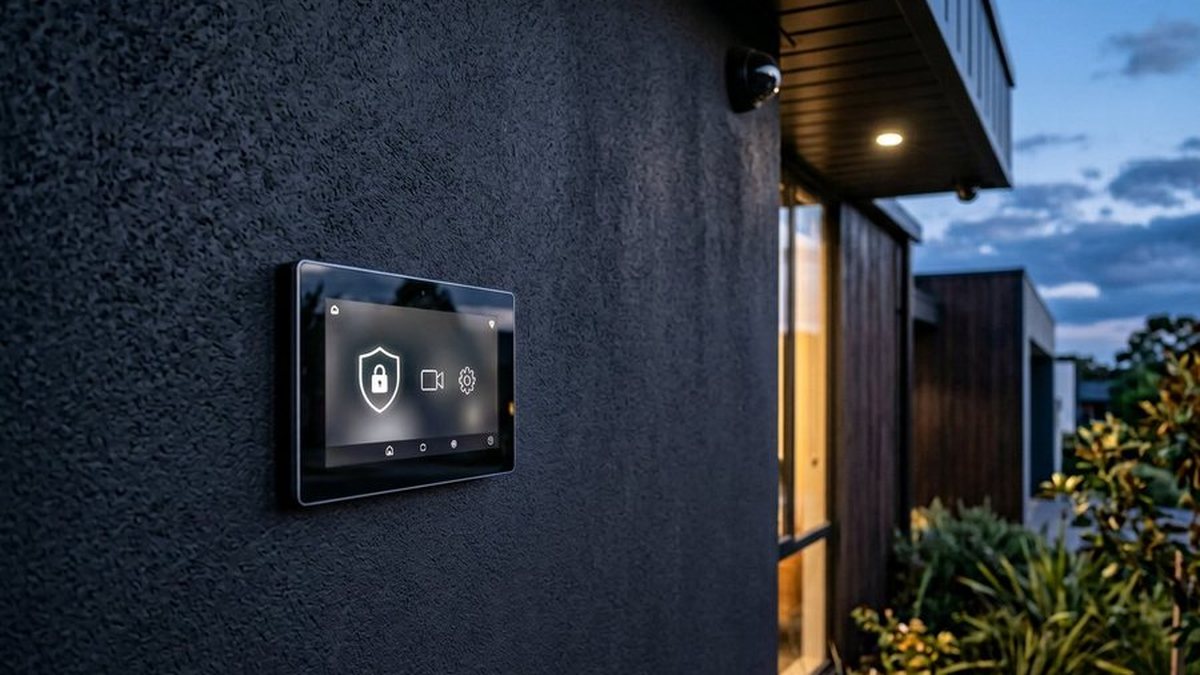
More cameras do not automatically mean more safety. Place a small number deliberately: one covering the approach to the front door, one covering the drive or rear access, and notification rules that alert you to genuine events rather than every passing cat.
- Point cameras at approaches and boundaries, not through neighbouring windows.
- Use local storage or a reputable service, and change default passwords immediately.
- Give every household member their own smart lock code, so access can be revoked cleanly.
- Keep a physical key route for emergencies and for guests who dislike apps.
Fire detection that actually works
Fire safety deserves the same discipline. Interlinked alarms mean that a smoke event in the kitchen wakes the bedrooms, which is the entire point.
- Alarms on every level, in circulation spaces and inside each bedroom.
- Heat detection in kitchens, where cooking smoke would otherwise cause nuisance alarms.
- A tested extinguisher or fire blanket within reach of the hob.
- Two usable escape routes from upper floors, and a meeting point outside.
- A testing routine tied to a household event, so it is remembered rather than postponed.
An alarm you cannot hear from the bedroom is decoration, not protection.
A seasonal walkthrough
- Test every alarm and replace batteries where required.
- Check camera images, recording and notification settings.
- Walk the boundary: gates, fences, shed locks and garden tools that could assist a break-in.
- Review outdoor lighting timers as sunset shifts.
- Confirm the escape plan with anyone new living in the home.
Rehearse it with the household
Protection is a family activity. Children should know the sound of each alarm, where the meeting point is and how to open the escape window without hesitation. Adults should know how to isolate the power, where the extinguisher lives and who calls the fire service.
Our home security and fire safety teams install these systems discreetly and hand them over with a walkthrough for everyone in the house — and a written record of what was fitted and when it was tested.