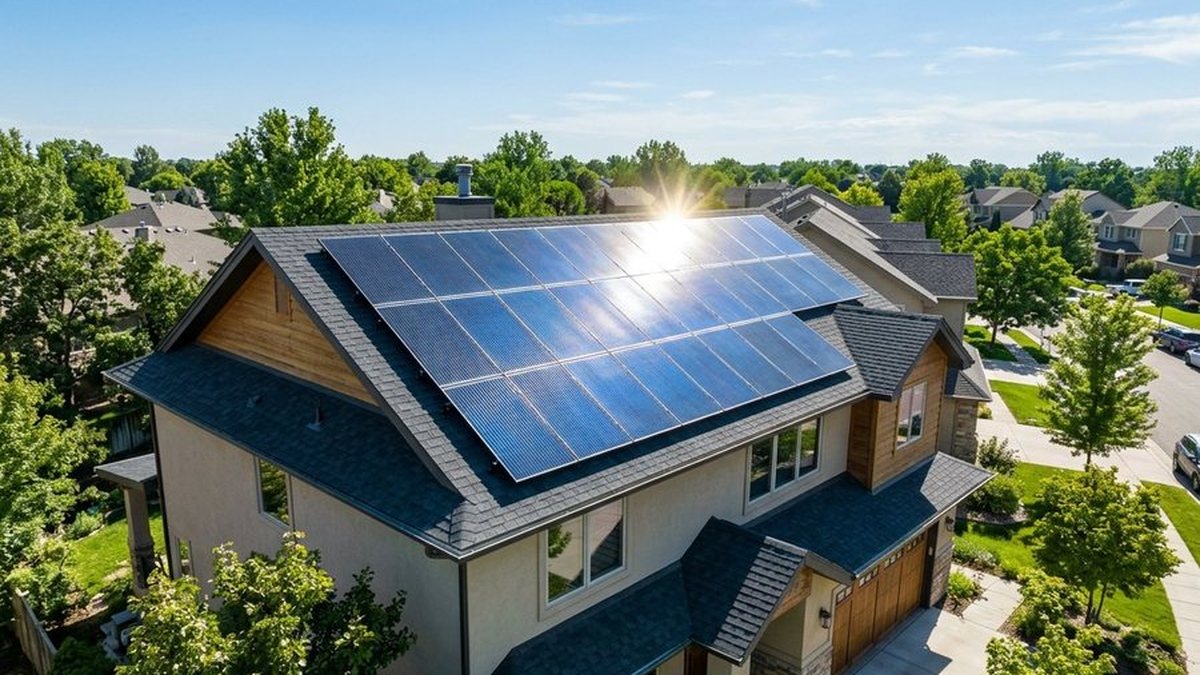
Solar installations have become quick to buy and slow to get right. The equipment is rarely the problem; the planning is. This guide sets out what to check before signing anything, so your upgrade delivers comfort and lower running costs rather than a roof full of hardware you cannot fully use.
Solar is a system, not a product
A solar upgrade is a set of decisions that have to agree with one another: roof condition, orientation, shading, inverter choice, battery capacity and the way your household uses power across a day. Sold as separate products, they disappoint. Planned together, they quietly shrink your bills decade after decade.
Before any proposal makes sense, someone should walk your roof and ask how you live.
Check the roof before the panels
Panels are expected to outlive their first mounting, and removing them to repair a roof beneath is expensive. If your covering is nearing the end of its life, replace it first — our roofing upgrade service is usually scheduled just ahead of solar for exactly this reason.
- Inspect decking, flashing and valleys for existing water paths.
- Confirm mountings will penetrate only sound, well-supported timber.
- Plan cable routes and roof penetrations before drilling anything.
- Agree who owns future access for cleaning and servicing.
Understand your household energy pattern
Solar rewards daytime consumption. A household at work and school all day saves less than a household running a home office, an electric vehicle or a heat pump through daylight hours. Look at your recent energy statements and note when usage actually peaks: morning and evening peaks point towards battery storage, while daytime peaks favour a slightly larger array.
A smaller system matched to your daytime usage usually beats a larger system you cannot consume.
Panels, inverters and batteries explained
- Panels convert daylight into direct current. Efficiency matters less than adequate roof area, sensible layout and shade management.
- Inverters convert that current for household use. Central inverters are economical; micro-inverters help when shading is unavoidable.
- Batteries store surplus daytime energy for evenings and outages. Size them around the loads you genuinely want to cover, not around a sales target.
- Monitoring shows what the system is doing, which is how you catch underperformance early instead of at the next bill.
Questions to ask any installer
- How was my system size calculated — from usage data or from roof area alone?
- What happens on a shaded, cloudy week, and how much will the grid still supply?
- Who performs the roof penetration work, and who warranties it?
- What is the service schedule for panels, inverter and battery?
- What happens at the end of the system’s life: removal, recycling and replacement?
- Can I see the monitoring dashboard before I sign, not after installation?
Shade, orientation and the long game
Trees grow. Chimneys cast afternoon shadows. A neighbouring extension may appear later. Ask for a shade study, trim what can reasonably be trimmed and accept that perfect orientation is a bonus rather than a requirement. A well-planned system on an imperfect roof outperforms an optimistic one on a perfect roof.
Pair solar with the rest of your home
Solar pays back fastest when the building stops wasting energy first: window replacements, roof and attic insulation, and efficient appliances. Our solar upgrade team plans both together, so the array you buy is the array you actually need.